
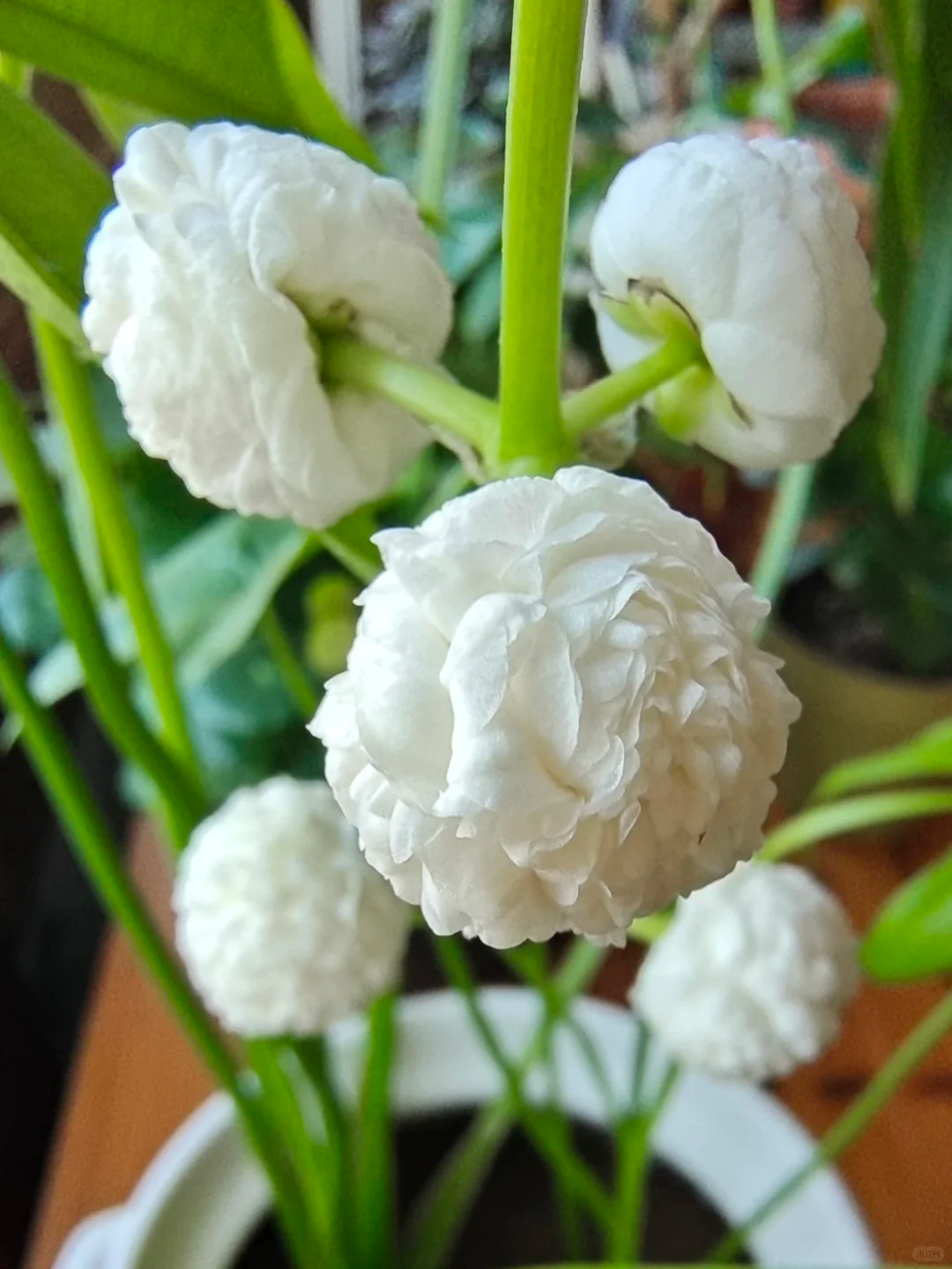

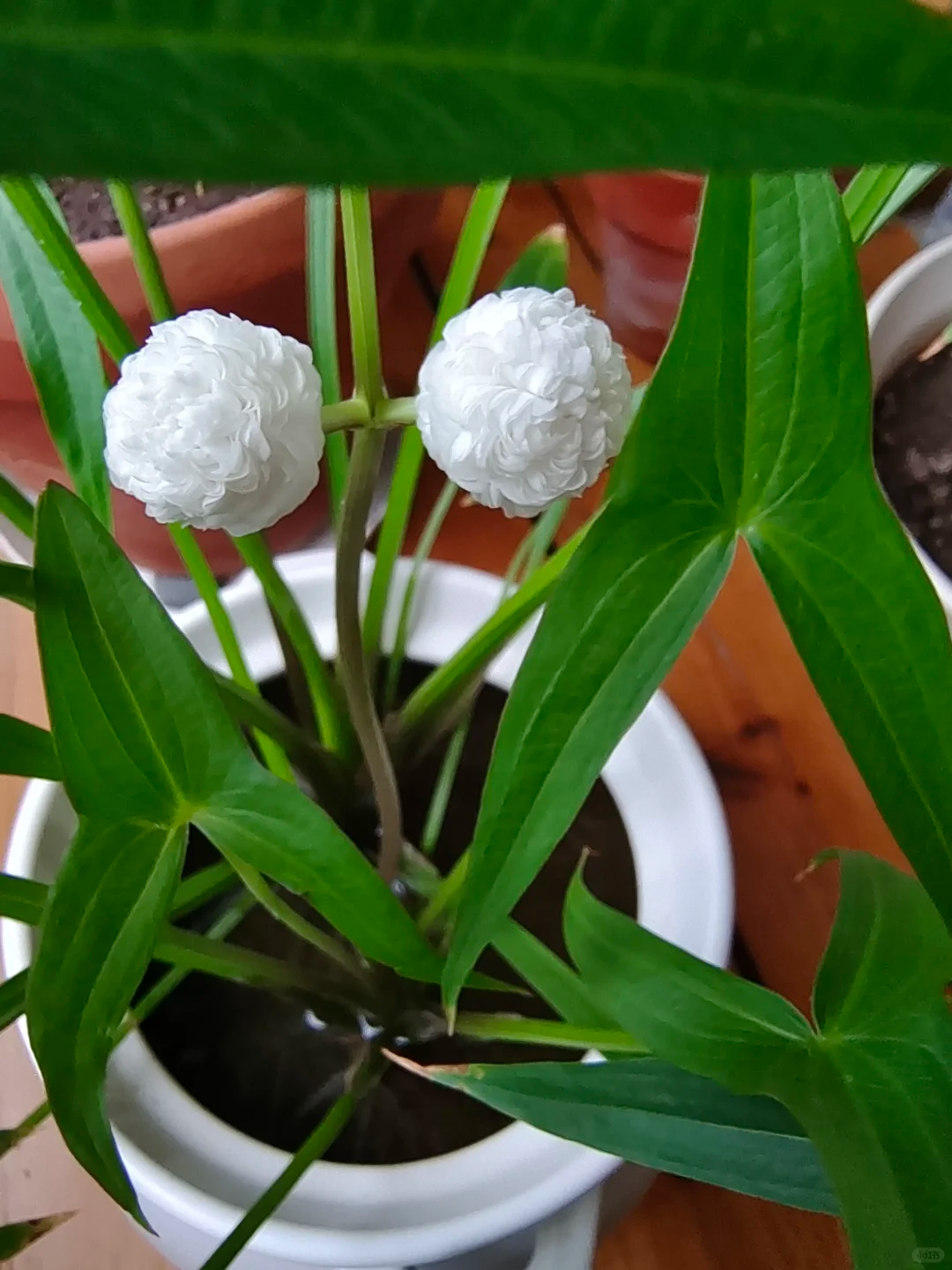
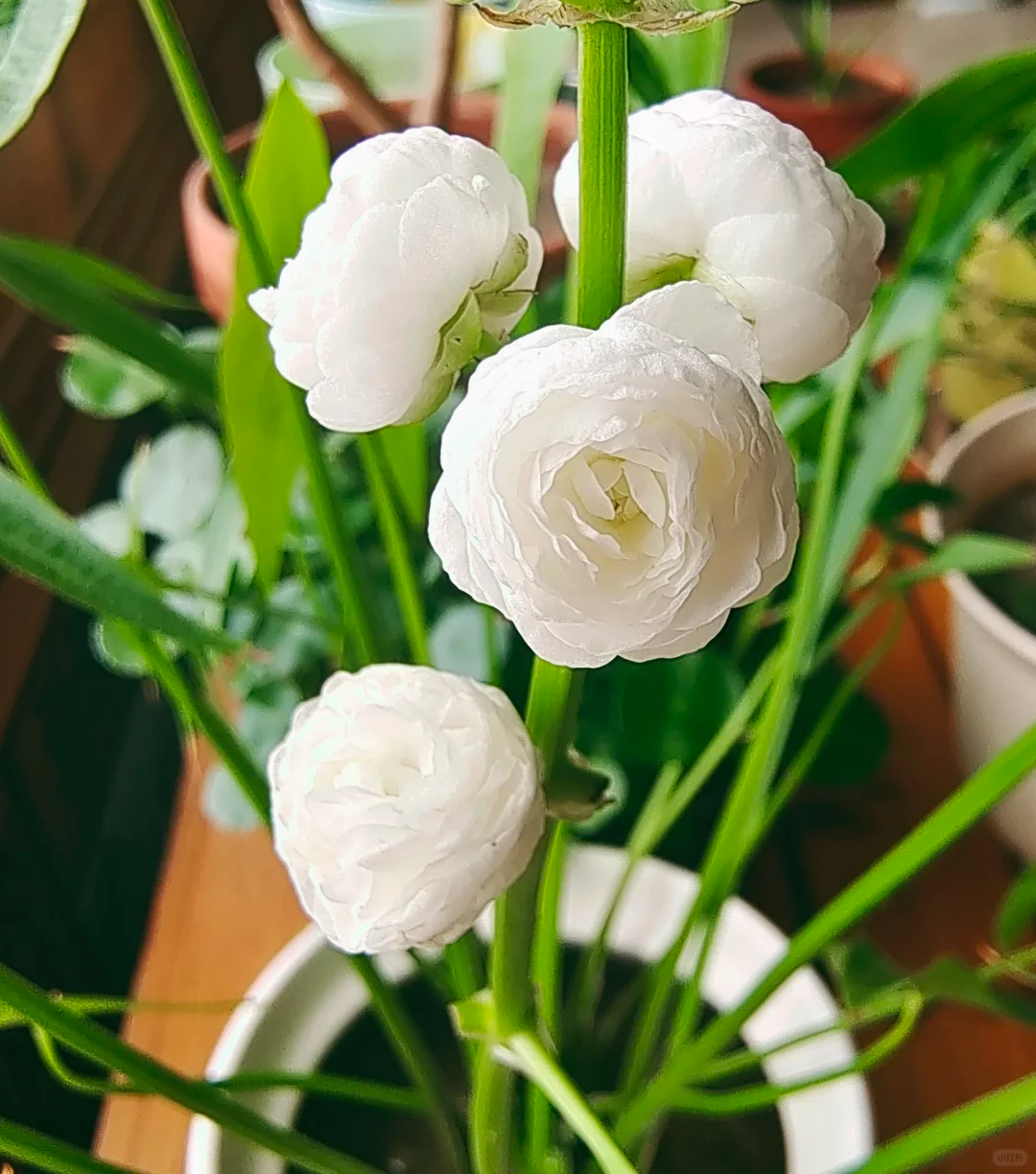
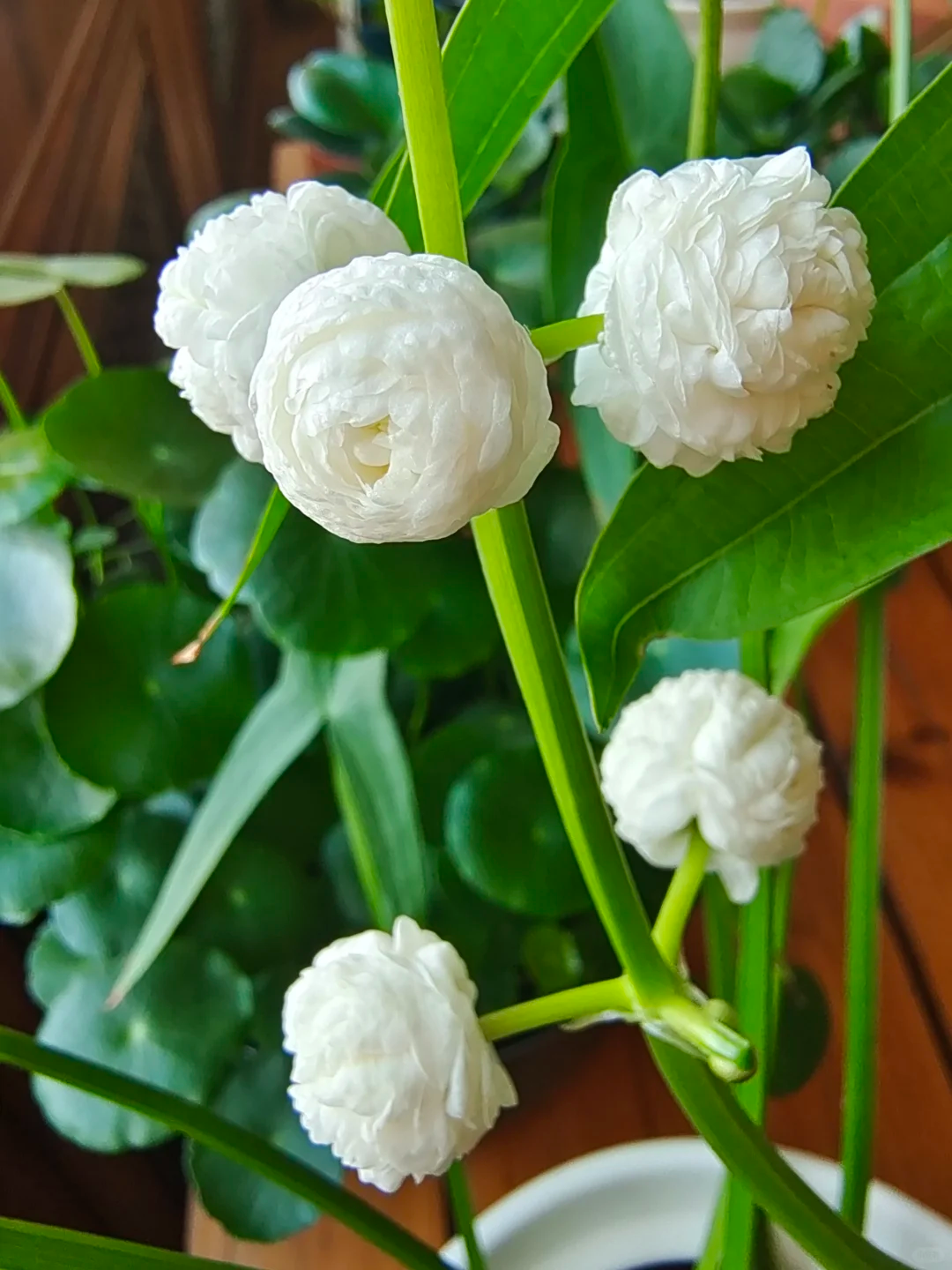
Double - petaled Sagittaria is usually referred to as double - petaled Sagittaria japonica, which is a perennial aquatic or paludal herb of the genus Sagittaria in the family Alismataceae. The following is a detailed introduction for you:
Morphological characteristics
- Rhizome: The rhizome creeps horizontally and is relatively robust.
- Leaves: The emergent leaves are sagittate, with large variations in shape. The base of the petiole gradually widens, and the edges are membranous.
- Flowers: The flowers are unisexual. The outer perianth segments are elliptical or broadly ovate; the inner perianth segments are white or pale yellow. The flowers of double - petaled Sagittaria are divided into male and female. Male flowers bloom in a round shape like a hydrangea, while female flowers bloom in a double - petaled shape like a peony.
- Fruits: The achenes are laterally compressed, obovate, about 4 mm long and 3 mm wide, with wings.
Growth habits
- Light: It requires sufficient sunlight.
- Temperature: It adapts to a mild climate and is intolerant of frost. It can bloom smoothly in an environment of 15 - 25 degrees Celsius. When the winter temperature is lower than 10 degrees Celsius, the flowering period will be postponed and shortened.
- Soil: It requires fertile soil but not too deep clay. It prefers soil rich in organic matter, with strong water and fertilizer retention capacity, soft texture, and a slightly acidic or neutral pH.
- Water: As an aquatic plant, it needs to be watered frequently to maintain a shallow water layer. The water level is 3 - 5 cm in the early growth stage, 10 - 15 cm during the vigorous growth period, reduced to 10 cm during the corm - forming period, and the soil should be kept moist in winter.
Cultivation points
- Soil selection: When planting double - petaled Sagittaria, choose deep, fertile, loose, and breathable slightly acidic soil. You can mix leaf mold, garden soil, fine sand, and organic fertilizer in a ratio of 4:4:1:1, and then pour diluted chlorothalonil solution for disinfection.
- Watering and fertilization: It has a high demand for fertilizers during the growth period. Appropriate topdressing can be carried out, with a reasonable combination of nitrogen, phosphorus, potassium, and other elements. Topdress 2 - 3 times during the growth period and once more during the corm - forming period. When watering, keep the soil slightly moist. Avoid waterlogging, and also prevent water from splashing on the flowers, otherwise it is easy to cause soft rot.
Main values
- Ornamental value: It has an elegant flower shape and snow - white color, which is very fresh and pleasing. The flowering period is long, lasting from May to November. It is suitable for landscape water feature layout and can also be used as a potted plant.
- Medicinal value: The corms have the effects of cooling blood to stop bleeding, relieving cough and stranguria, dissipating nodules and detoxifying, regulating the stomach and strengthening the intestines.