
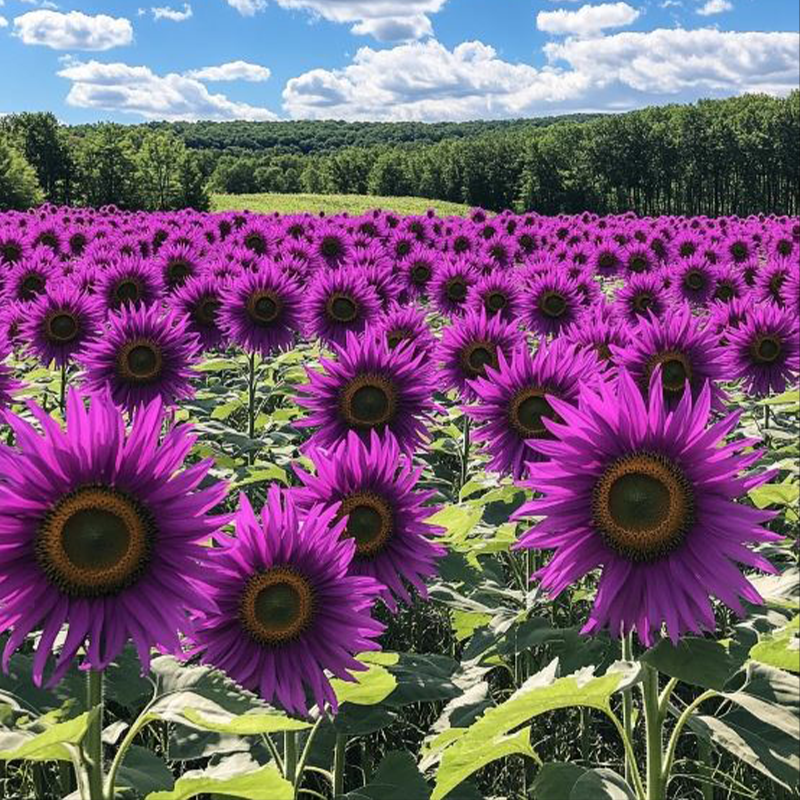
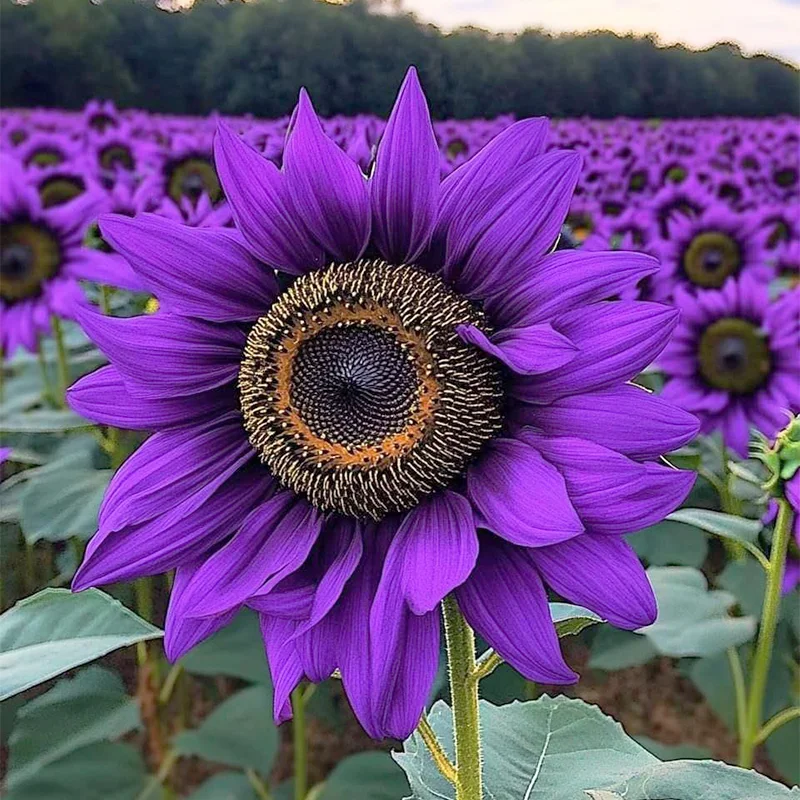
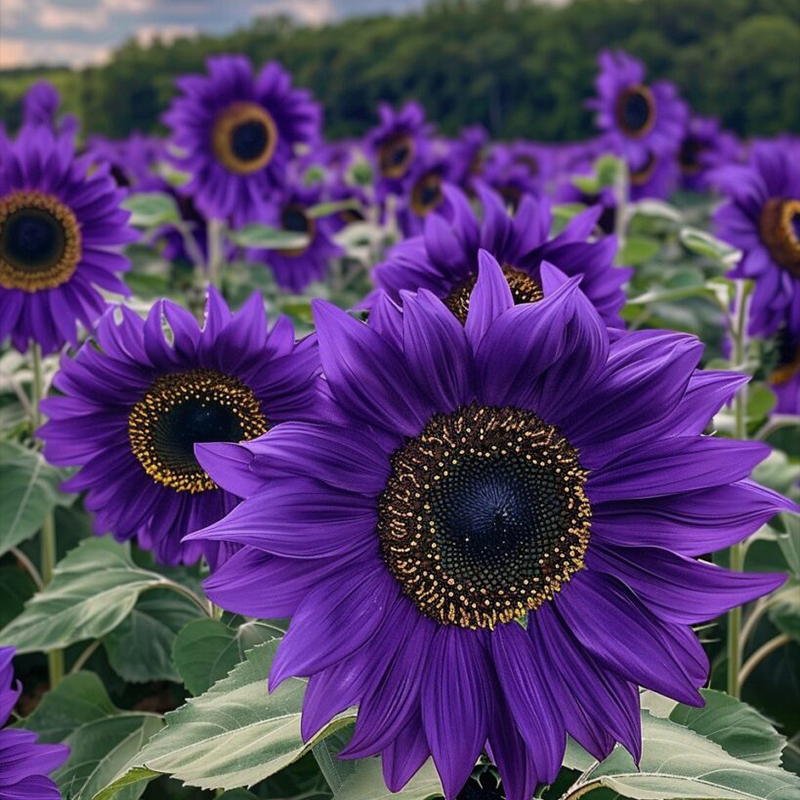
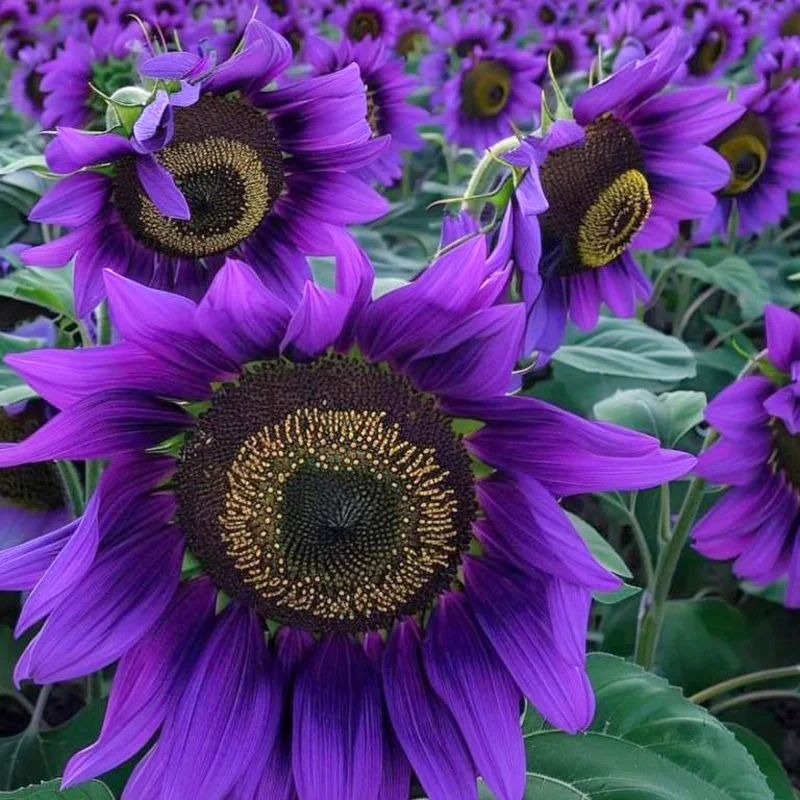
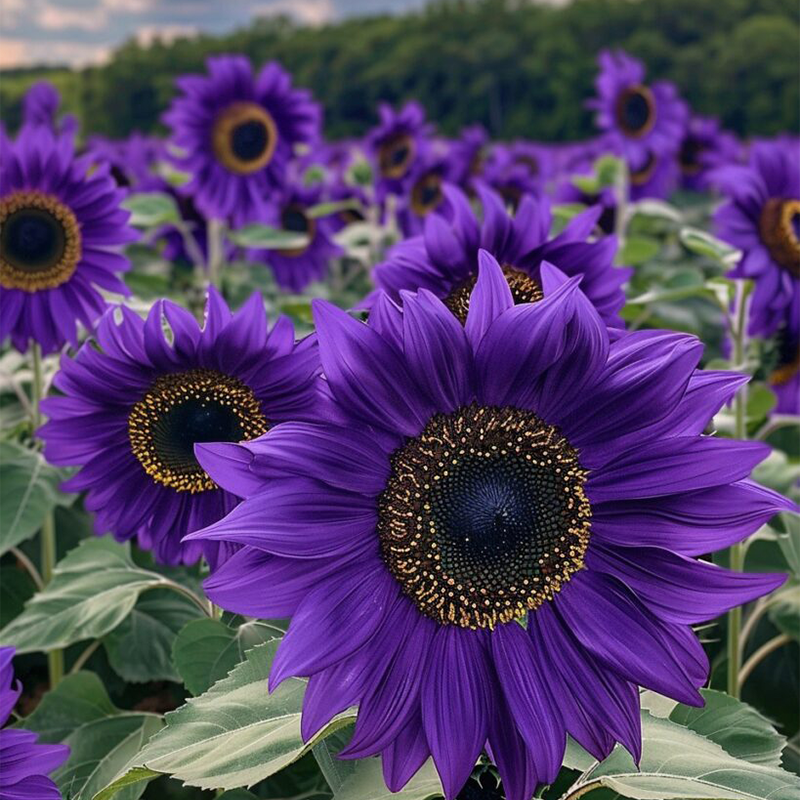
A field of enchanting purple sunflowers, whose dark centers contrast beautifully with the bright petals, creating a royal and majestic atmosphere.
Plant Care Instructions:
Light: Full sun exposure is essential to maintain the deep purple hue.
Water: Water thoroughly once or twice a week, depending on the weather.
Soil: Prefers well-drained, loamy soil that is rich in organic matter.
Temperature: Grows best in temperatures between 70 and 85 degrees F.
Humidity: Tolerates moderate humidity but thrives in well-ventilated areas.
Organic Fertilizers:
Use a slow-release organic fertilizer early in the growing season for a continuous supply of nutrients.
Garden Decoration Ideas:
Perfect for adding a bold pop of color to garden beds or as a stunning backdrop for floral arrangements.
Here is a detailed chart for purple sunflowers:
| Category | Information |
|---|---|
| Botanical Name | Helianthus annuus ‘Violet Majesty’ or ‘Purple Sun’ |
| Common Name | Purple Sunflower |
| Plant Type | Annual |
| Hardiness Zone | 2-11 (depends on variety; generally suited to a range of climates) |
| Sun Exposure | Full sun |
| Soil Type | Well-drained, fertile soil |
| Watering | Regular watering, especially in dry periods; allow soil to dry out between waterings |
| Growth Habit | Upright, branching |
| Height/Spread | Typically 4-6 feet tall; spread can vary, often 2-3 feet wide |
| Special Features | Unique purple coloration; attracts pollinators; adds a bold color contrast in gardens |
Growing Information
Sunflowers are grown from seed sown directly in the garden after frost.
After the danger of frost has passed, sow the seeds directly into average soil in full sun.
When choosing a location, remember that sunflowers need well-drained soil. They face the sun, so make sure they are in an open area of the garden. The larger varieties will cast shade on other plants, so plant these at the north end of your garden.
Prepare the soil by removing weeds and working organic matter into the top 6-8 inches of soil; then level and smooth it.
Most plants respond well to soils enriched with organic matter. Compost is a wonderful form of organic matter with a good balance of nutrients and an ideal pH level, and it can be added to your planting area at any time. If compost is not available, sprinkle 1 to 2 inches of organic mulch on the soil after planting, which will begin to decompose into compost. After the growing season, a soil test will show what soil amendments are needed for the following season.
Sow seeds 1/2 inch deep in groups of 2 or 3 seeds. Space groups 18-24 inches apart, depending on the variety.
Tamp soil down lightly, water in, and keep evenly moist.
Seedlings will emerge in 7-10 days.
When seedlings have two sets of leaves, reduce the number to one plant per group.
Keep weeds under control during the growing season. Weeds compete with plants for water, space, and nutrients, so control them by either cultivating them frequently or using mulch to prevent their seeds from germinating.
Mulch also helps retain soil moisture and maintain a consistent soil temperature. For annuals, an organic mulch of shredded leaves gives the bed a natural look and improves the soil as it breaks down over time. Always keep mulch away from a plant's stems to prevent possible rot.
Keep the soil evenly moist, but not wet.
Once established, sunflowers are drought tolerant.
No fertilizer is needed unless the soil is poor. Do not overfertilize.
Watch for pests and diseases. Ask your local Cooperative Extension Service for pest control products recommended for your area.
Some varieties produce only one bloom. Once the bloom has faded, the plant can be removed.
Remove plants if they are killed by frost in the fall to prevent disease the following year.
Edible sunflowers mature about 3 months or more after sowing. To harvest the seeds, cut off the flower heads when the stems are completely dry but before the fall or winter rains come. Check the flower heads for maturity to see if the florets in the center of the flower disk have shriveled and the back of the flower head is turning yellow or the head is beginning to droop. Cut the flower heads off with a foot of the stem remaining. Hang the heads in a warm, dry, well-ventilated place to allow the seeds to fully ripen and dry. A cheesecloth, mesh or paper bag with holes for ventilation should be placed over the head to protect the seeds and catch any that may fall off during drying.
Smaller varieties can be grown in containers. Be sure to use commercial potting soil.
Pollenless varieties make excellent cut flowers.